
Industrial gearboxes are critical components in power transmission systems, and their operational failure can lead to significant production downtime and equipment damage. Identifying gearbox failure modes at an early stage is essential for maintaining mechanical efficiency and preventing catastrophic breakdowns. This diagnostic guide addresses the three most common indicators of gearbox distress: overheating, vibration, and abnormal noise, providing a structured approach to identifying root causes and implementing corrective actions.
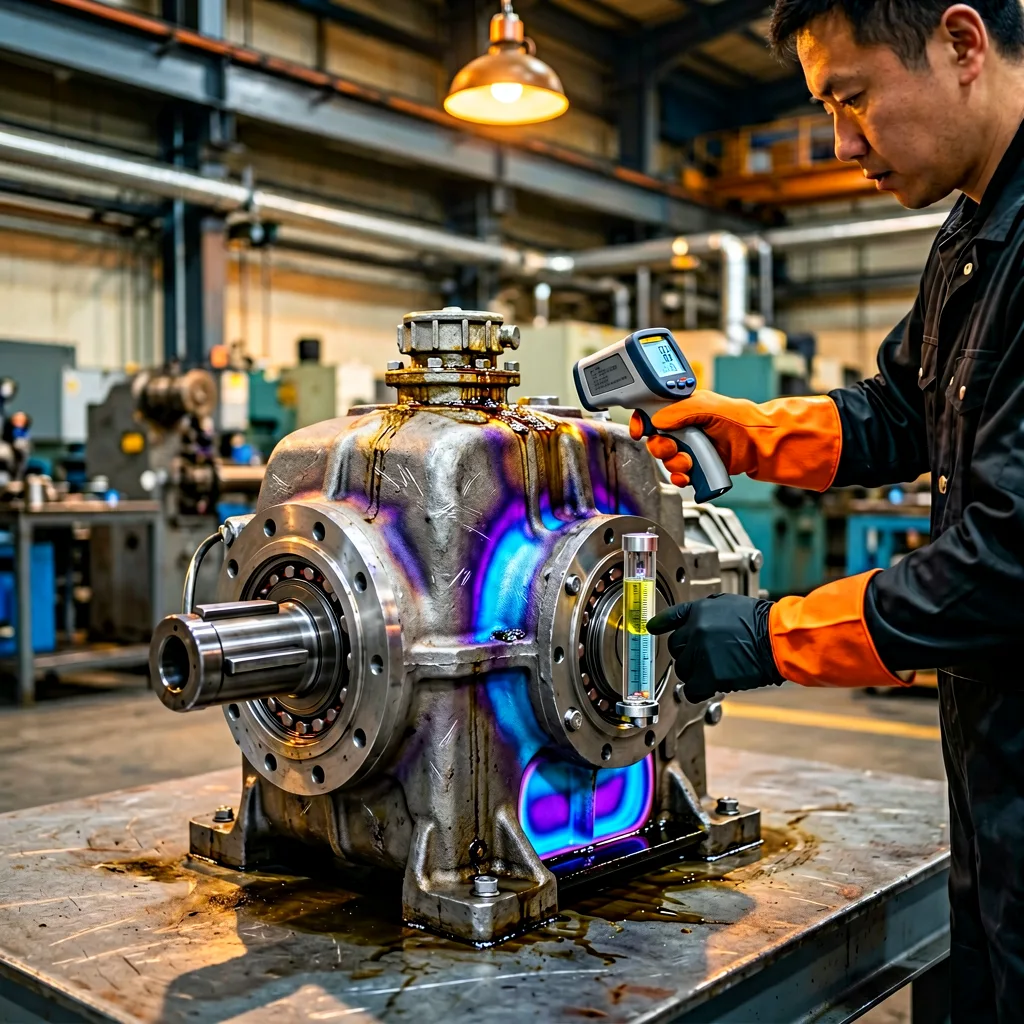
Gearbox Overheating: Causes and Diagnostic Steps
Overheating is a primary indicator of thermal stress or lubrication failure within a gearbox housing. Under normal operating conditions, a gearbox typically maintains a steady-state temperature below 80°C (176°F). Sustained temperatures exceeding this threshold, or rapid temperature increases during standard operations, suggest underlying mechanical or hydraulic inefficiencies.
Primary Causes of Overheating
- Inadequate Lubrication: Low oil levels, incorrect lubricant viscosity (e.g., using an ISO VG 220 oil instead of the specified ISO VG 320 for heavy loads), or degraded lubricant can reduce the hydrodynamic film thickness, causing metal-to-metal contact and excessive frictional heat generation.
- Overloading: Exceeding the gearbox’s rated mechanical torque capacity forces the gears to operate under higher stress, converting excess input power into thermal energy rather than kinetic output.
- Blocked Ventilation: A clogged breather valve or blocked housing cooling fins can trap internal heat. As the oil heats and expands, pressure builds, preventing thermal dissipation.
- Worn Internal Components: Deteriorated bearings or heavily scored gear teeth increase rolling and sliding resistance, directly elevating the operating temperature.
Diagnostic Steps for Overheating
To accurately diagnose gearbox overheating, technicians must perform a systematic inspection of the thermal and lubrication systems. First, verify the actual operating load against the manufacturer’s rated capacity to rule out application overloading. Next, inspect the gearbox breather valve to ensure unobstructed airflow. Finally, extract an oil sample to check for proper viscosity, oxidation, and particulate contamination, and verify that the oil level aligns with the dipstick or sight glass specifications.
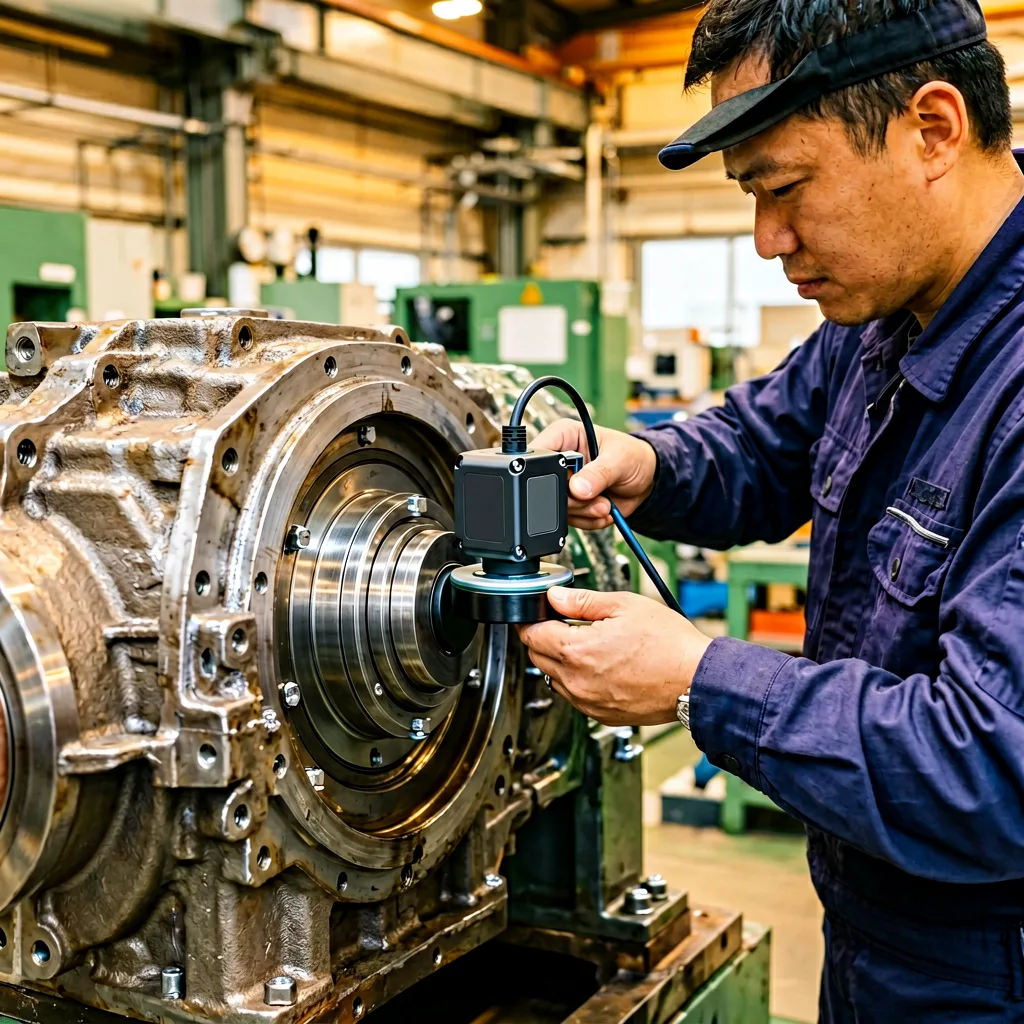
Gearbox Vibration: Root Causes and Detection Methods
Abnormal vibration is a highly reliable precursor to mechanical failure in rotating equipment. While all gearboxes exhibit a baseline level of operational vibration, sudden increases in amplitude or changes in the vibration frequency spectrum indicate specific mechanical defects. Utilizing vibration analysis is crucial for identifying the exact failing component before a breakdown occurs.
Root Causes of Abnormal Vibration
- Misalignment: Improper shaft alignment between the motor, gearbox, and driven equipment induces severe radial and axial loads, generating high 1X and 2X running speed vibration frequencies.
- Bearing Failure: Inner race, outer race, or rolling element defects (such as spalling or brinelling) produce distinct, high-frequency vibration signatures corresponding to the bearing’s specific defect frequencies.
- Gear Defects: Broken gear teeth, excessive wear, or pitch line runout generate impacts at the Gear Mesh Frequency (GMF) and its harmonics, often accompanied by sidebands indicating specific fault locations.
- Resonance and Looseness: Mechanical looseness in the mounting base or bearing housing typically manifests as directional vibration with strong harmonics, while structural resonance amplifies vibration at specific operating speeds.
Detection and Analysis Methods
Effective vibration diagnosis requires the use of accelerometers mounted on the gearbox bearing housings. Technicians should perform Fast Fourier Transform (FFT) spectrum analysis to break down the complex vibration signal into its individual frequency components. Identifying the Gear Mesh Frequency (calculated as the number of teeth multiplied by the shaft rotational speed) and monitoring its amplitude and sidebands allows for precise isolation of gear-related faults versus bearing or alignment issues.
Gearbox Noise: Types, Causes, and Troubleshooting
Audible noise is often the first observable symptom of a developing gearbox fault. The type, rhythm, and intensity of the noise provide critical diagnostic information about the internal condition of the gears and bearings. Distinguishing between normal operational hums and pathological acoustic emissions is key to effective troubleshooting.
Types of Noise and Associated Causes
- Whining or Howling: Typically associated with gear misalignment, insufficient tooth contact, or early-stage pitting. This noise often changes pitch with variations in the input shaft speed.
- Grinding or Clicking: A strong indicator of advanced bearing failure, broken gear teeth, or hard foreign debris trapped within the lubricant circulating system.
- Rattling or Clunking: Usually points to excessive backlash between meshing gears, loose internal components, or severe shaft misalignment allowing the gears to clash under load fluctuations.
- High-Pitched Squealing: Often caused by insufficient lubrication causing sliding friction between gear teeth, or a binding shaft bearing experiencing lubrication starvation.
Acoustic Troubleshooting Steps
When diagnosing gearbox noise, first isolate the equipment to confirm the gearbox as the noise source, ruling out motor or driven equipment interference. Utilize a mechanic’s stethoscope or an ultrasonic acoustic detector to pinpoint the loudest point of emission on the gearbox housing. Correlate the acoustic findings with load conditions: if the noise intensifies under load, suspect gear tooth or bearing structural failure; if the noise occurs during no-load operation, investigate internal clearance or backlash issues.
Essential Preventive Maintenance for Gearbox Reliability
Preventing the occurrence of overheating, vibration, and noise requires a robust, proactive maintenance strategy. Implementing a structured preventive maintenance program significantly extends the operational lifespan of a gearbox and minimizes unplanned downtime.
Key Preventive Practices
- Regular Lubricant Analysis: Conduct quarterly oil sampling to monitor viscosity degradation, water content, and metal particulate counts (wear metals like iron, copper, and lead). This provides early warning of internal component wear before noise or vibration becomes apparent.
- Thermal Imaging Inspections: Utilize infrared thermography on a routine basis to detect hot spots in bearings, oil seals, and gear mesh zones that are not yet detectable by standard temperature gauges.
- Periodic Alignment Verification: Perform laser shaft alignment checks on the motor-to-gearbox and gearbox-to-driven-equipment connections after any maintenance intervention or base bolt torque verification.
- Breather and Filter Maintenance: Clean or replace breather valves and oil filters according to OEM specifications to ensure proper ventilation and lubricant cleanliness, preventing both overheating and abrasive wear-induced vibration.
By systematically analyzing the symptoms of overheating, vibration, and noise, maintenance professionals can accurately diagnose common gearbox failure modes and implement targeted corrective actions. Early detection not only preserves the mechanical integrity of the equipment but also ensures sustained operational efficiency and safety.
FAQ: Common Gearbox Diagnosis Questions
What is the maximum allowable operating temperature for an industrial gearbox?
Most industrial gearboxes are designed to operate continuously at temperatures up to 80°C (176°F) above ambient temperature. Sustained operating temperatures exceeding 95°C (203°F) generally indicate a fault and accelerate the degradation of the lubricating oil.
How often should gearbox oil be sampled for analysis?
For critical equipment, oil sampling should be performed every 3 months or every 500 operating hours, whichever comes first. For non-critical gearboxes, semi-annual sampling is typically sufficient to monitor wear trends.
What does a grinding noise in a gearbox specifically indicate?
A grinding noise usually indicates severe mechanical interference, most commonly caused by broken gear teeth, advanced bearing spalling, or large metallic debris trapped within the gear mesh. Immediate shutdown and internal inspection are required to prevent total failure.
Can gearbox vibration cause bearing failure?
Yes, excessive vibration—particularly from misalignment or gear mesh issues—transmits dynamic loads directly to the bearings. Over time, this accelerates fatigue in the bearing raceways, leading to premature spalling and eventual seizure.
Why does my gearbox overheat only under heavy loads?
Overheating under load typically points to inadequate lubrication film strength, incorrect oil viscosity, or the gearbox operating beyond its rated torque capacity. The hydrodynamic lubricant film breaks down under high pressure, causing direct metal-to-metal contact and rapid heat generation.
Related Posts

What Is a Spur Gear? How It Works & Where It’s Used
You're reviewing a machine spec sheet and see "spur gear…
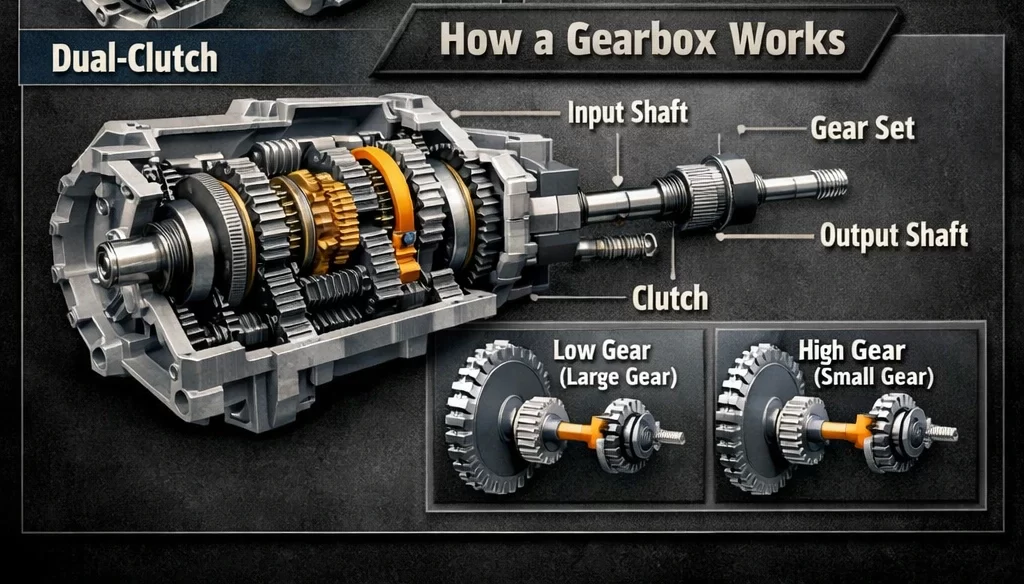
Gearbox Explained: Types, Functions & How to Choose the Right One
You're reviewing a motor specification sheet and the term "gear…

Helical Gear vs Spur Gear: Noise Level, Efficiency & Torque Comparison Data
Choosing between a helical gear and a spur gear usually…